
Why built environment brands lose to worse competitors on Google
Great work does not rank itself. A look at the technical and content gaps that quietly hand your traffic to weaker rivals.
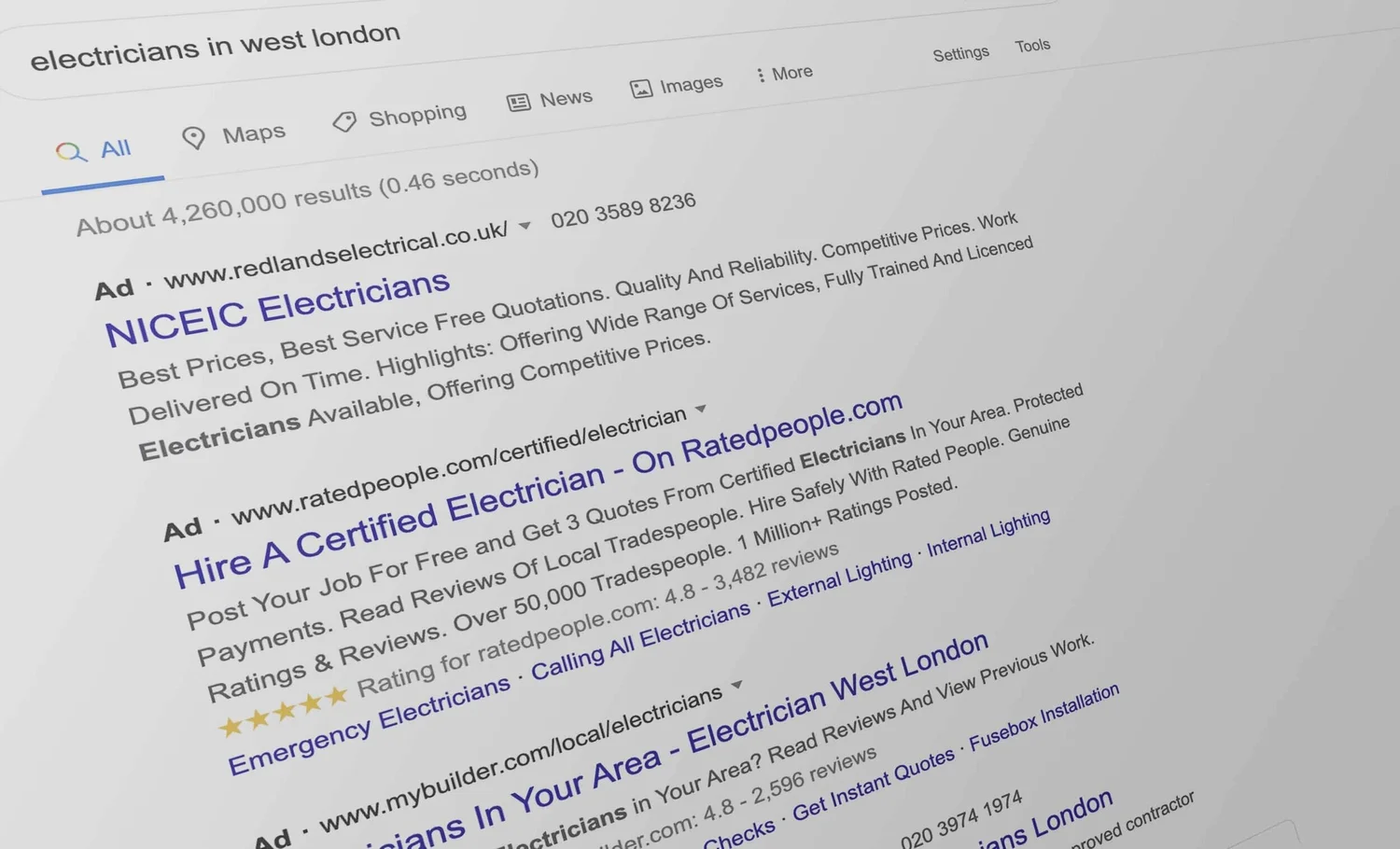
You have seen it happen. A competitor with thinner experience, weaker work and a website that looks like it was built in 2011 sits above you on Google for the exact search that matters. Your best-in-class projects, meanwhile, sit on page two, where almost nobody looks.
It is one of the most quietly infuriating things in this industry. And it is almost never about who is actually better.
Google ranks legibility, not quality
A search engine cannot walk a site, read a spec or judge a detail. It reads code, content and signals from the rest of the web, then makes a bet about who deserves to be at the top. If your website is slow, thin or badly structured, you have handed that bet to whoever made themselves easier to read.
That is good news, not bad. Craft is hard to copy. Being legible to Google is a solvable problem, and the odds are your competitors have not solved it either.
The three gaps that quietly cost you
When a weaker brand outranks a stronger one, it is almost always one of three things.
Technical foundations
Slow load times, broken structure, no mobile optimisation, missing basics like schema. Google demotes what frustrates people, and a specifier bouncing off a slow page on site is a frustrated person.
Content that answers the search
Most built environment sites describe what the company does. They rarely answer what a buyer actually typed. The firm with a clear page for each service, product and question wins, because it matches more of the searches that matter.
Authority
Google trusts the brands the rest of the web trusts. If trade publications, partners and directories link to a competitor and not to you, that competitor looks more credible to the algorithm, whatever the reality on the ground.
Why the sector is easier to win than you think
In consumer markets, SEO is trench warfare. In the built environment it rarely is. Buyers and specifiers search in precise, high-intent ways, a material and a city, a system and a building type, the competition is thin, and the firm that turns up with a fast, well-structured, genuinely useful page tends to win the enquiry outright.
The searches are low in volume but extremely high in value. A single specification or contract can be worth more than a year of consumer clicks. You do not need to win everything. You need to own the handful of searches your best clients actually make.
How to tell which gap is yours
Before you spend anything, work out which of the three gaps is actually holding you back, because the fix for each is completely different and doing the wrong one first costs you a year. The diagnosis takes an afternoon and needs nothing more than a browser, Google Search Console and a willingness to look at your own site the way a stranger would.
Start by searching the term you most want to win, in a private window, and writing down who appears above you. Then open the top three results and read them properly. You are not judging the design. You are looking for what those pages give a reader that yours does not: depth, specifics, named projects, real numbers, answers to the obvious follow-up questions. Nine times out of ten the difference is embarrassingly plain once the two pages are side by side.
If their pages are longer and more specific
Your gap is content. The fix is writing real pages about what you actually do, not sprinkling more keywords into the ones you already have.
If your pages are comparable but slow
Your gap is technical. Run the page through PageSpeed Insights and check Search Console for coverage errors before you write another word.
If content and speed are both level
Your gap is authority. They are being linked to and mentioned by sources Google already trusts, and you are not. That is a digital PR problem, not an on-page one.
If you cannot find your page at all
Your gap may be indexation. A page Google has crawled and chosen not to keep is a different problem from one it has never seen, and Search Console will tell you which of the two you have.
Whichever it turns out to be, the value of the exercise is that it converts a vague frustration into a specific job. Losing to a worse competitor stops being a mystery the moment you can name the gap.
What to do about it
Fix the foundations first, so the site is fast and readable. Build the pages that match how your buyers search. Then earn the authority that tells Google you are the real thing. Done in that order, rankings compound, and the competitor with the worse work quietly slides back to where they belong.
It is the work we do for built environment brands every week, and it is why a brand like Terrazzo Tiles saw a 315% lift in organic traffic. If you suspect a weaker competitor is taking work that should be yours, that is usually a sign the gap is fixable.
None of this is quick and none of it is mysterious. The firms sitting above you are not better than you at the work. They are simply easier for Google to read, and that is a solvable problem.
Losing searches you should own?
Send us the search that annoys you most. We will tell you exactly why they outrank you and what it takes to swap places.
Get the honest diagnosis →