
Letting space when every listing looks the same
Four dim photographs, a floor plan and a bullet list of amenities. If that is your marketing, the occupier has nothing to choose on except the rent.
- Topic
- Commercial Property
- Read
- 5 min
- By
- Cornerstone Group
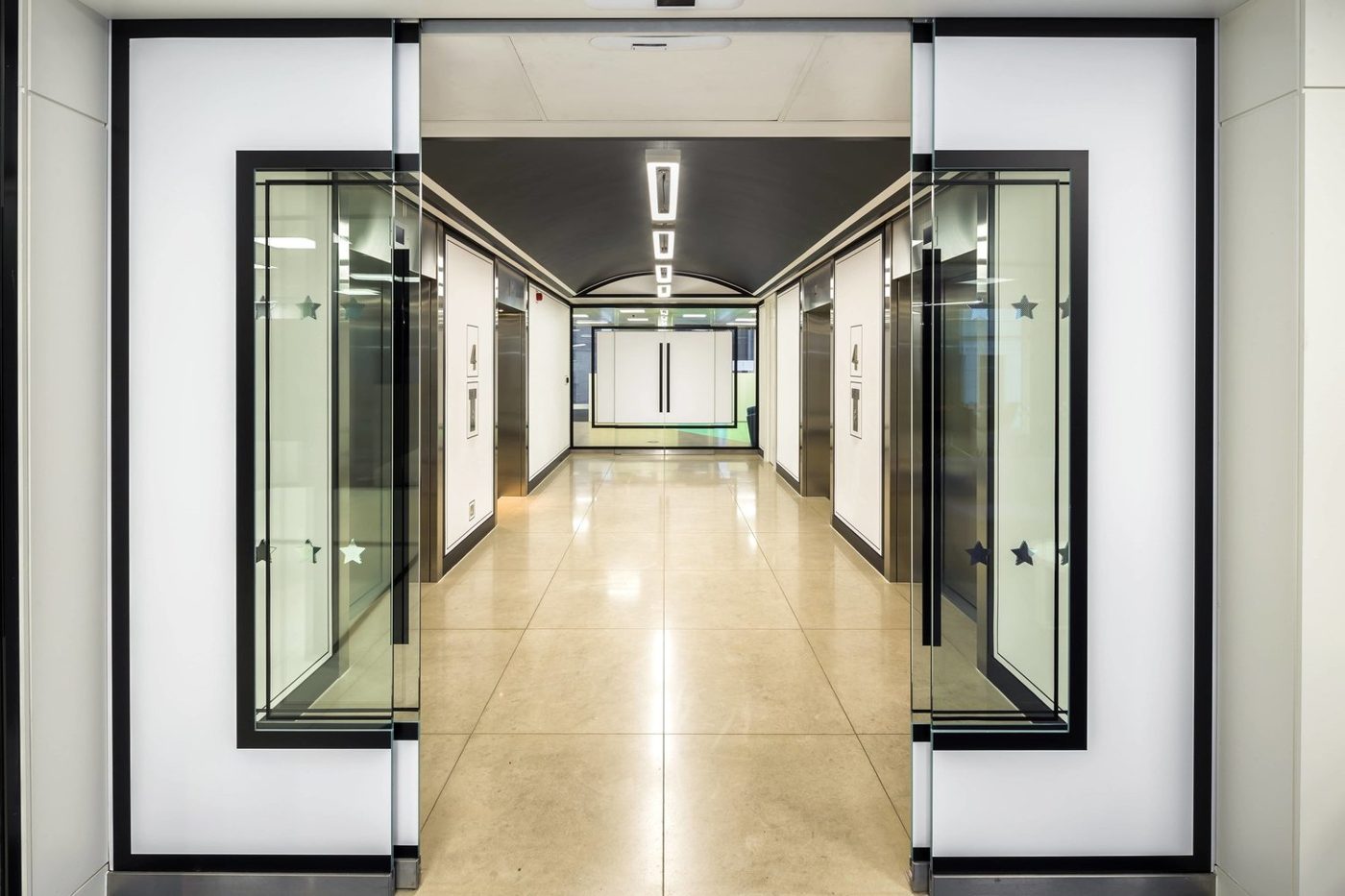
Open four commercial letting listings for similar space in the same city. The particulars are close to identical: a floor plan, four dim photographs, a bullet list of amenities and a phone number. The occupier looking at all four has been given nothing to choose between them except the rent.
That is a marketing failure rather than a market condition, and it is one of the easier ones to fix, because the standard is so low that any genuine effort stands out immediately.
What an occupier is actually deciding
A business choosing premises is making a decision about its people. Will the team come in? Is the commute tolerable? Is there anywhere to eat? Does it look like somewhere that says something true about us? Rent and square footage are constraints rather than reasons.
None of those questions are answered by particulars. They are answered by photography showing the building in use, by writing about the area, by a floor plan somebody who is not a surveyor can read, and by being honest about what the space is not.
The other thing an occupier is quietly deciding is whether the landlord will be reasonable to deal with. A listing that is vague about service charge, unclear on lease terms and slow to respond is a preview of the relationship, and it gets read as one.
What to publish beyond the particulars
Photography with people in it
An empty office is a rectangle. The same space with people working in it is a place. This is the single biggest difference between listings that produce viewings and listings that do not.
A tour that can be walked
Occupiers and their advisors shortlist remotely first. A tour gets the space onto the shortlist without anybody getting on a train, and it removes the viewings that were never going to convert.
A fit-out visualisation
Most occupiers cannot picture their business in a Cat A shell. Showing one or two plausible layouts for a business of roughly the right size does the imagining on their behalf.
The numbers in full
Rent, service charge, rates, lease length, break options. Withholding these does not generate enquiries, it filters out serious people and keeps the time-wasters.
The area, written properly
Transport, food, gyms, parking, what is opening nearby. The occupier is choosing a location as much as a building, and almost nobody is writing about it.

Why a building deserves its own page
Portals are rented ground. A listing appears, takes a fraction of the traffic and then disappears when the space is let, taking every bit of accumulated interest with it.
A building with its own page keeps working. It ranks for its own address and street, which is what people search after seeing the hoarding or being sent the name. It can carry the tour, the photography, the floor plans and current availability. And it stays up between lettings, which means the next void starts with an asset rather than a blank page and a fresh listing fee.
For a multi-let building or an estate, that page becomes the place tenants, agents and prospects all go, which over a few years is worth considerably more than a series of listings that expire.
The part that costs nothing
Answer quickly. In commercial property the response time on an enquiry is treated as information about the landlord, and a two-day gap tells an occupier something they will remember when it comes to negotiating.
Keep availability accurate, too. A floor still listed a month after it went under offer produces exactly one outcome, which is an occupier who now distrusts everything else on the page.
What to do with a space that has been empty a while
A long void changes the job. By that point the space has usually been listed, relisted and quietly discounted, and everybody in the local market has already seen it. Repeating the same marketing more loudly is not going to work.
Change what is shown, not the price
New photography, a tour and a fit-out visualisation give agents something new to send. A rent reduction on identical particulars only tells the market you are under pressure.
Re-cut the space
Two smaller suites often let faster than one large floor, and the cost of testing that idea is a floor plan rather than a building contract.
Say what it is good for
Naming two or three specific uses gives an occupier permission to picture themselves there. Suitable for a variety of uses tells them nothing at all.
Go direct as well as through agents
A building page you own can be promoted to a defined local audience for very little, and it reaches occupiers who never look at the portals.
The other thing worth doing is asking. Agents know why viewings are not converting and are rarely asked directly. Three phone calls usually surface the same objection, and it is almost never the rent on its own.
The advantage here is not that any of this is difficult. It is that so few landlords and agents bother, so a building presented properly is not competing against equals. It is competing against four dim photographs and a PDF.
Finally, treat the building's own page as the master record and the portals as distribution. Availability, photography and floor plans then change in one place and everything else points at it, which is the only realistic way a listing stays accurate across four portals and two agents without somebody losing a morning a week to it.